Published on 29 Jun 2026 by admin website
Study Type: Large retrospective real-world cohort study
Sample Size: 12,516,607 adults (mean age 60.4 years)
Data Source: Epic Cosmos multicenter electronic health records database
Published: 2026 in Ophthalmology Glaucoma
OSA is significantly associated with higher glaucoma risk Compared to sleep-tested controls without OSA:
Patients with OSA but no PAP record had a 27% higher risk of developing glaucoma (HR 1.27).
Patients with OSA and PAP device record had a 110% higher risk (HR 2.10).
2.Incidence Rates
Crude glaucoma incidence per 1,000 person-years:
Controls: 1.74
OSA without PAP: 2.38
OSA with PAP: 3.39
10-year cumulative incidence: 1.58% (controls), 2.30% (OSA no PAP), 3.86% (OSA with PAP).
Regarding PAP Therapy The higher risk in the PAP group does not imply that PAP treatment itself causes glaucoma. The authors suggest this is likely due to selection bias — patients using PAP usually have more severe OSA.
This is one of the largest real-world studies to date, strongly supporting that Obstructive Sleep Apnea (OSA) is an independent risk factor for developing glaucoma. Clinicians are advised to increase glaucoma screening and monitoring for patients with OSA, especially moderate-to-severe cases.
The study highlights the need for further prospective research to clarify the long-term effects of PAP therapy on glaucoma risk.
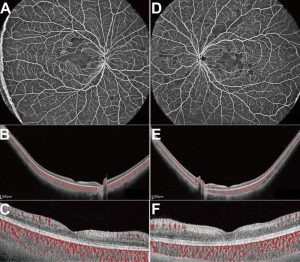
In our practice, the TowardPi YAlkaid and BMizar are frequently utilized to monitor glaucoma progression and changes. These systems enable highly detailed follow-up of retinal blood flow and layer thickness variations across different regions.
在那篇 12.5 million 患者的大型研究中:
有 PAP 使用紀錄 的 OSA 患者,被分為一組來比較青光眼風險。
研究發現這組患者的青光眼風險較高,但作者強調這很可能反映OSA 本身較嚴重(需要使用 PAP),而非 PAP 治療本身導致青光眼。